Tiny Temples
Exploring Artistic Practice Through Virtual Reality
During a three-month residency with Stryx Gallery based in the Digbeth area of Birmingham, I explored how virtual reality could extend my artistic practice beyond the screen and into physical space.
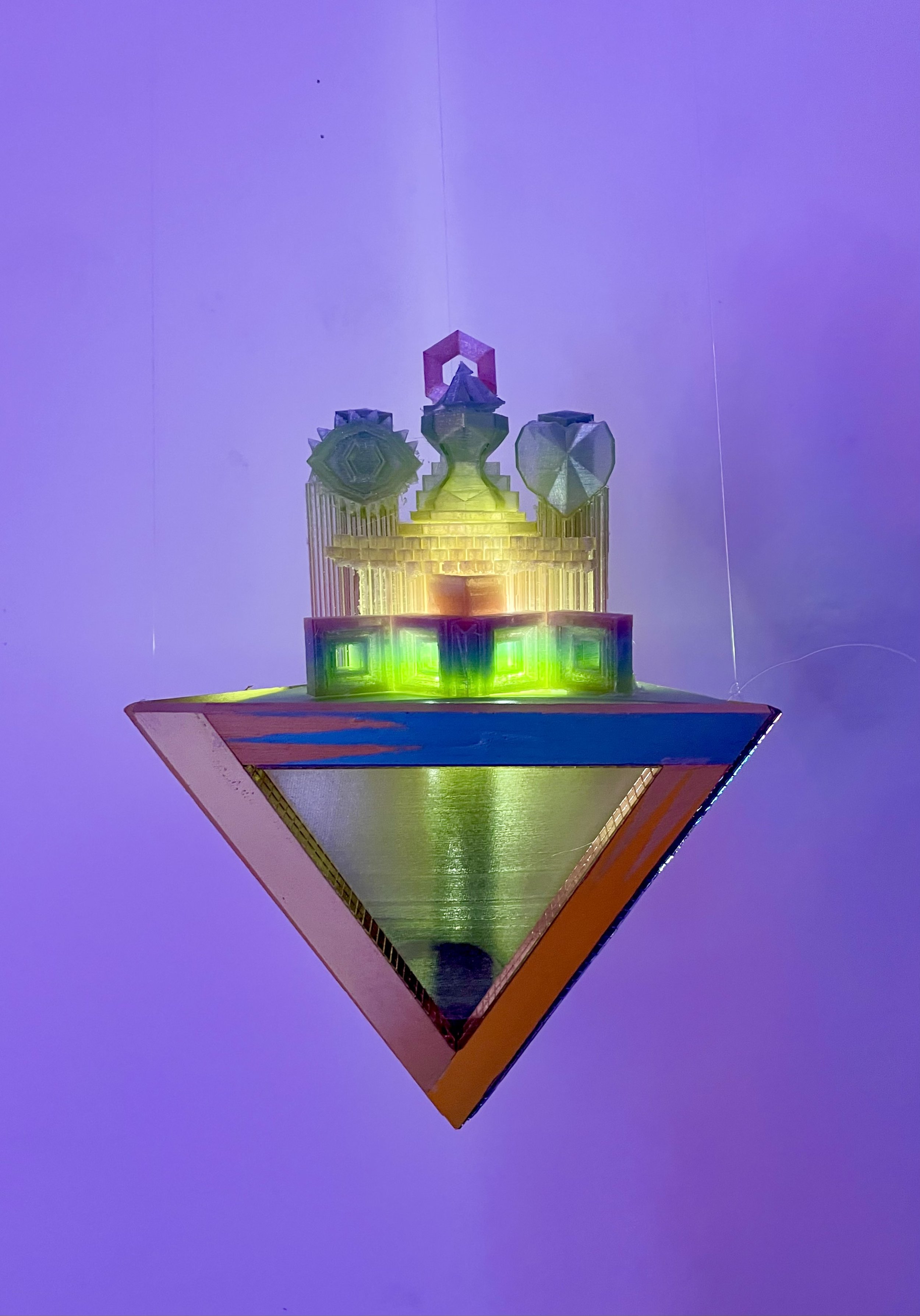
Beginning with experimental drawing in Open Brush, my research evolved into Tiny Temples, a series of miniature sculptures developed through VR modelling and 3D printing. The work explored the relationship between our external appearance and internal worlds, questioning how meaning is created, perceived and interpreted by others.
Moving between virtual and physical environments challenged my understanding of scale, materiality and the presentation of artwork. This reflection considers the creative possibilities of VR, the practical challenges of learning unfamiliar technologies, and how experimentation can influence not only what we make, but how we think about making it.
STRYX SPOT VR RESIDENCY
Exploring Artistic Practice Through Virtual Reality
A Critical Reflection by Sarah Harris
Virtual reality is often associated with immersive experiences and the creation of worlds beyond the limitations of physical space. But for artists, its possibilities go much further. VR offers a different way of thinking about making art, challenging familiar relationships with materials, scale, space and how an audience experiences work.
The Stryx Soup VR Residency brought together artists from different disciplines to explore virtual reality as a creative tool. Rather than focusing entirely on producing finished digital artworks, the programme offered time and space to experiment, learn new skills and consider how technology might influence existing creative practices.
Working in VR requires a shift in thinking. Gravity, scale and the limitations of physical materials no longer apply in quite the same way. Objects can be enlarged, manipulated or experienced from perspectives that would be impossible in the physical world. But having this freedom doesn't necessarily make the creative process easier. Learning unfamiliar software, finding the right tools and understanding how they might contribute to an artistic idea can be challenging in itself.
Experimentation as a Creative Process
One of the most valuable aspects of a residency is having the freedom to explore ideas without necessarily knowing where they will lead. This feels particularly important when working with unfamiliar technology, where learning how something works can become part of the creative process.
During the residency, applications such as Open Brush and Gravity Sketch offered new ways of drawing and sculpting in three-dimensional space. Rather than working on a flat surface or constructing something physically, artists could create directly within an environment that surrounded them.
This changes the relationship between the artist and their work. The words you’re listening to are dancing around your head. A drawing can become something you move through. A sculpture can be viewed from within, enlarged beyond human scale or reduced to something tiny.
It also raises some interesting questions. When a drawing exists in three dimensions, is it still a drawing? If a sculpture only exists in a virtual environment, does that change how we understand or experience it?
There aren't necessarily straightforward answers, but exploring these questions can challenge established ways of making art.
Between Virtual and Physical Worlds
Although VR is often presented as an alternative to physical reality, I found the relationship between the two particularly interesting.
Early experiments using passthrough technology allowed digital drawings to be created around existing physical objects. Rather than replacing what was already there, these interventions changed how familiar objects could be seen and interpreted.
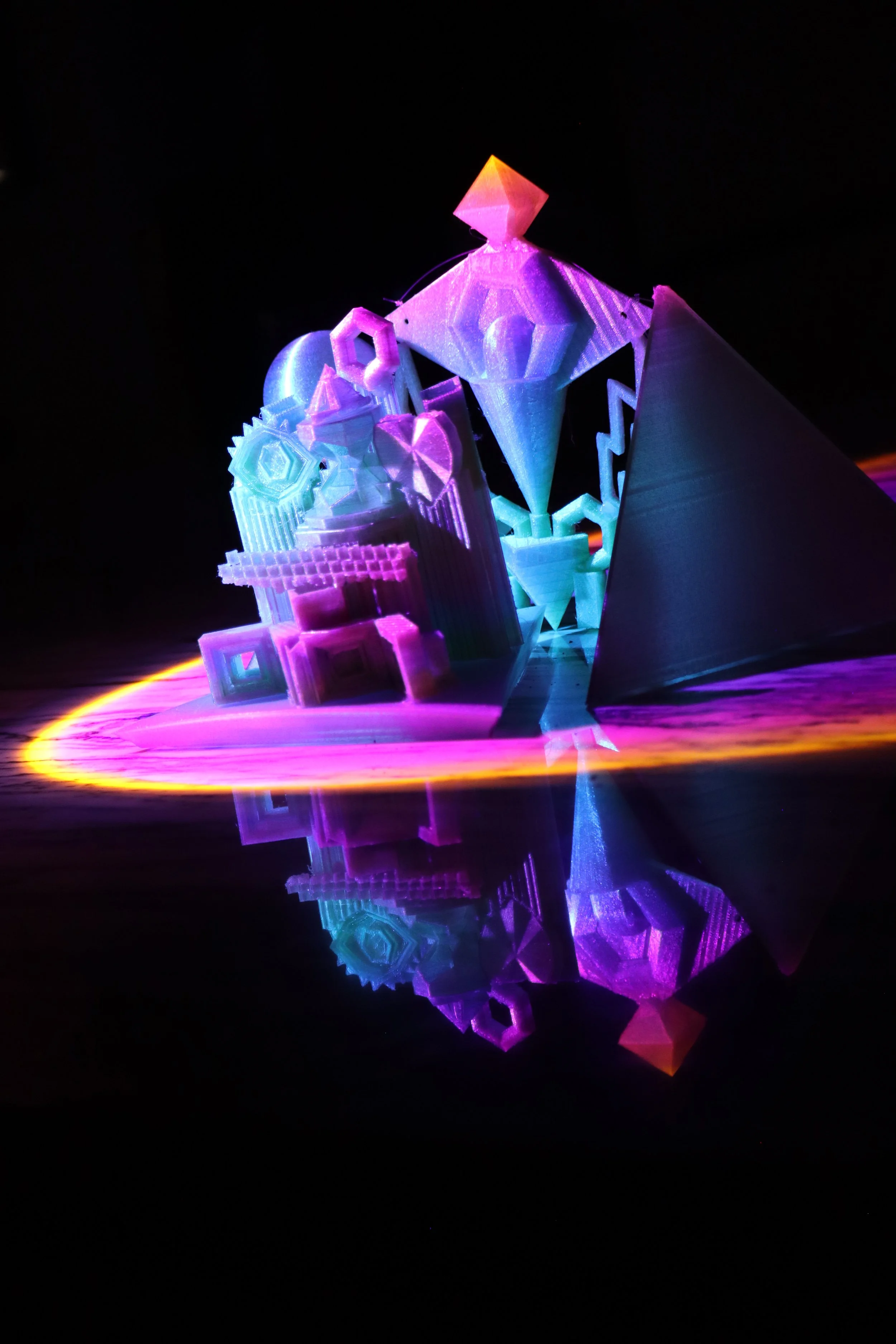
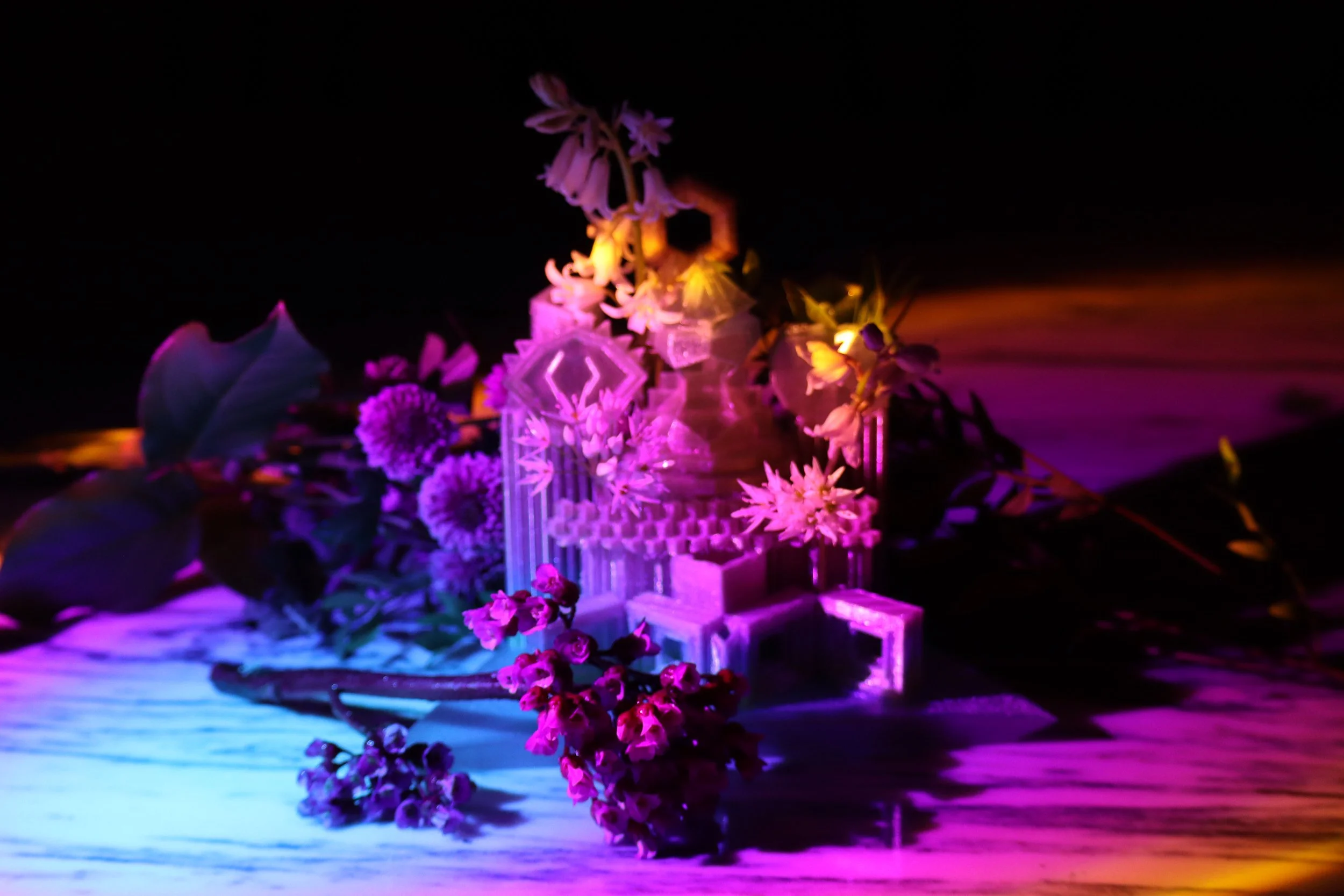
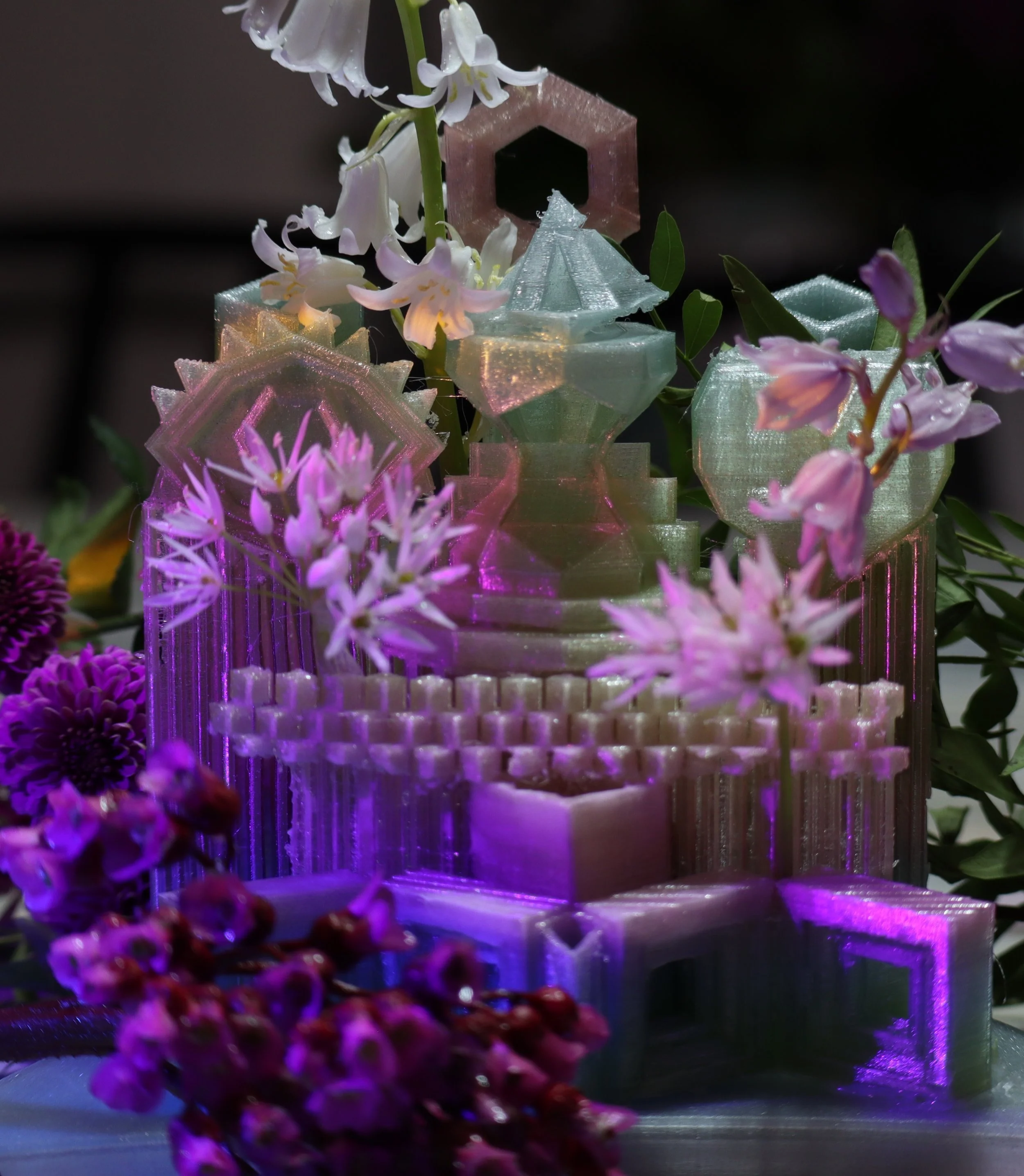
This led to the development of Tiny Temples, a series of small sculptures exploring the contrast between what we see on the outside and what people hold within themselves.
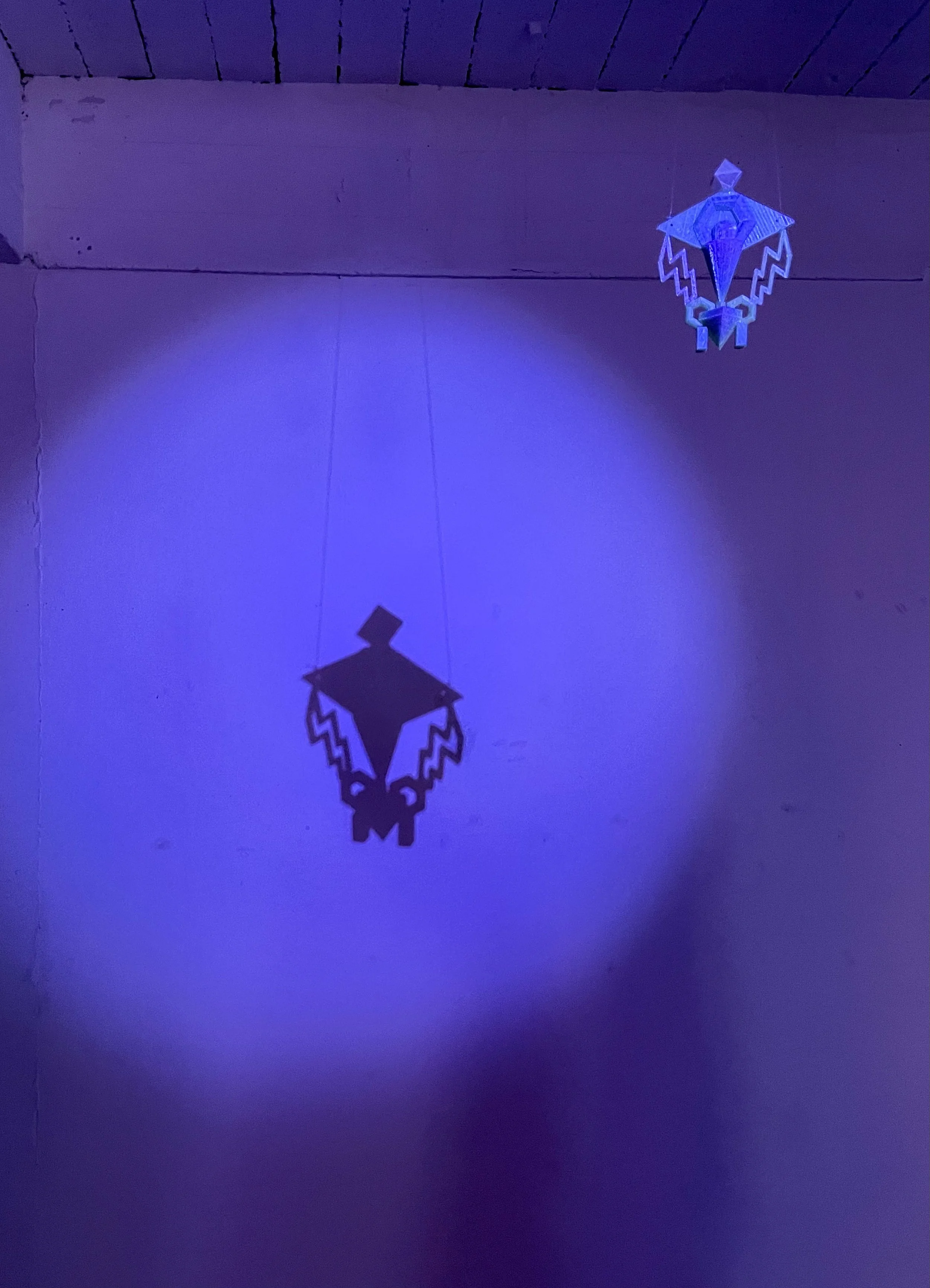
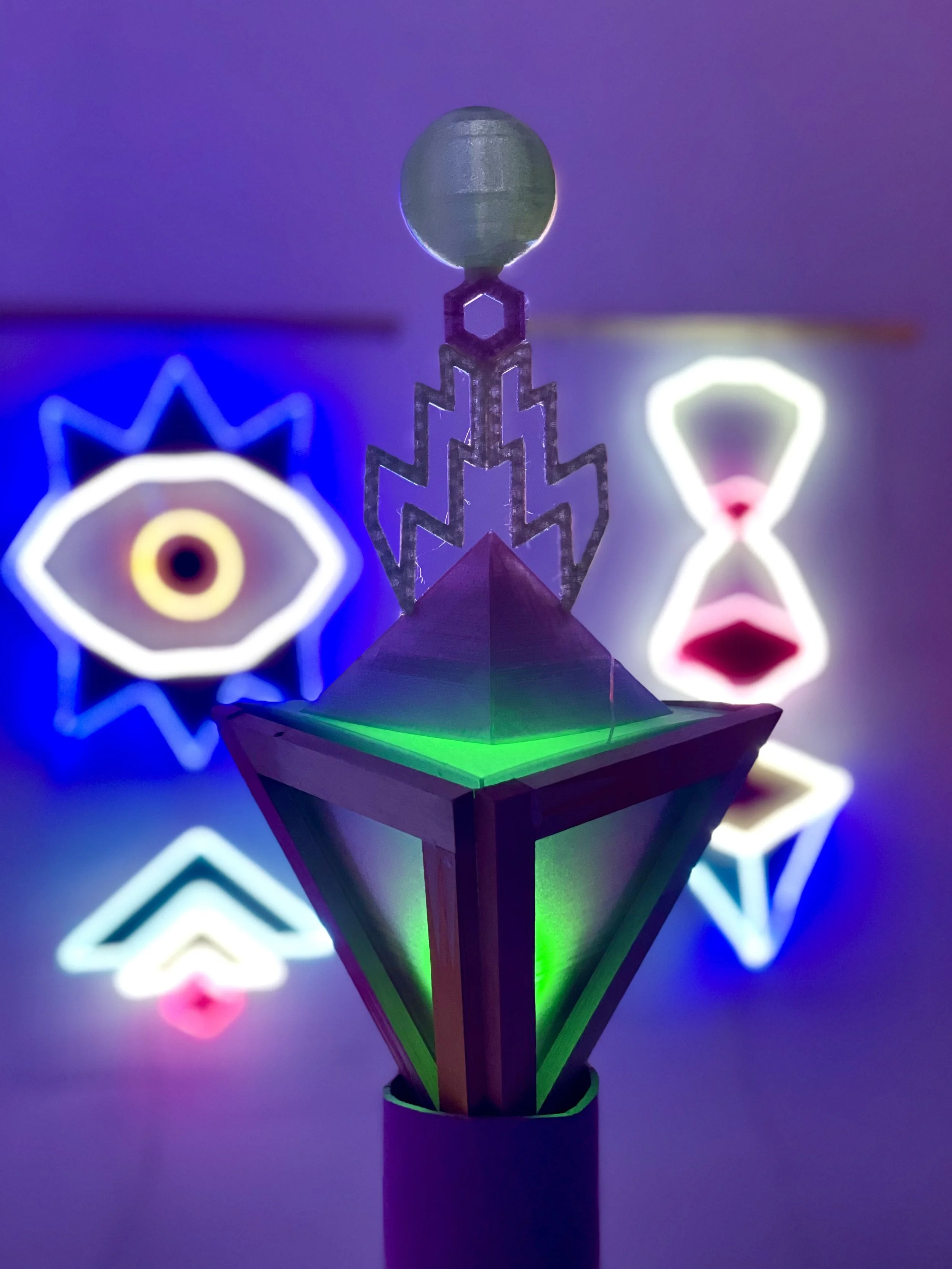
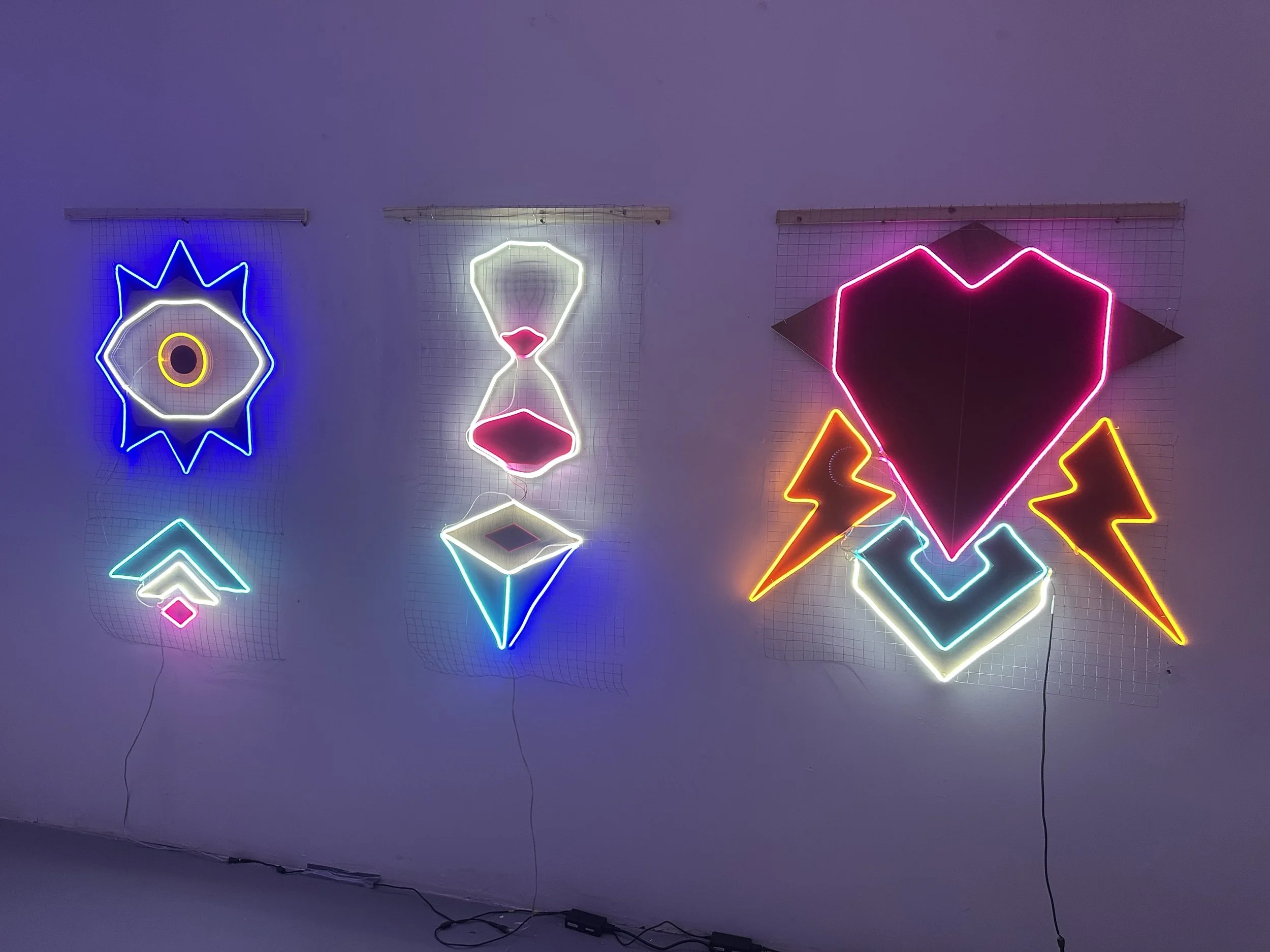
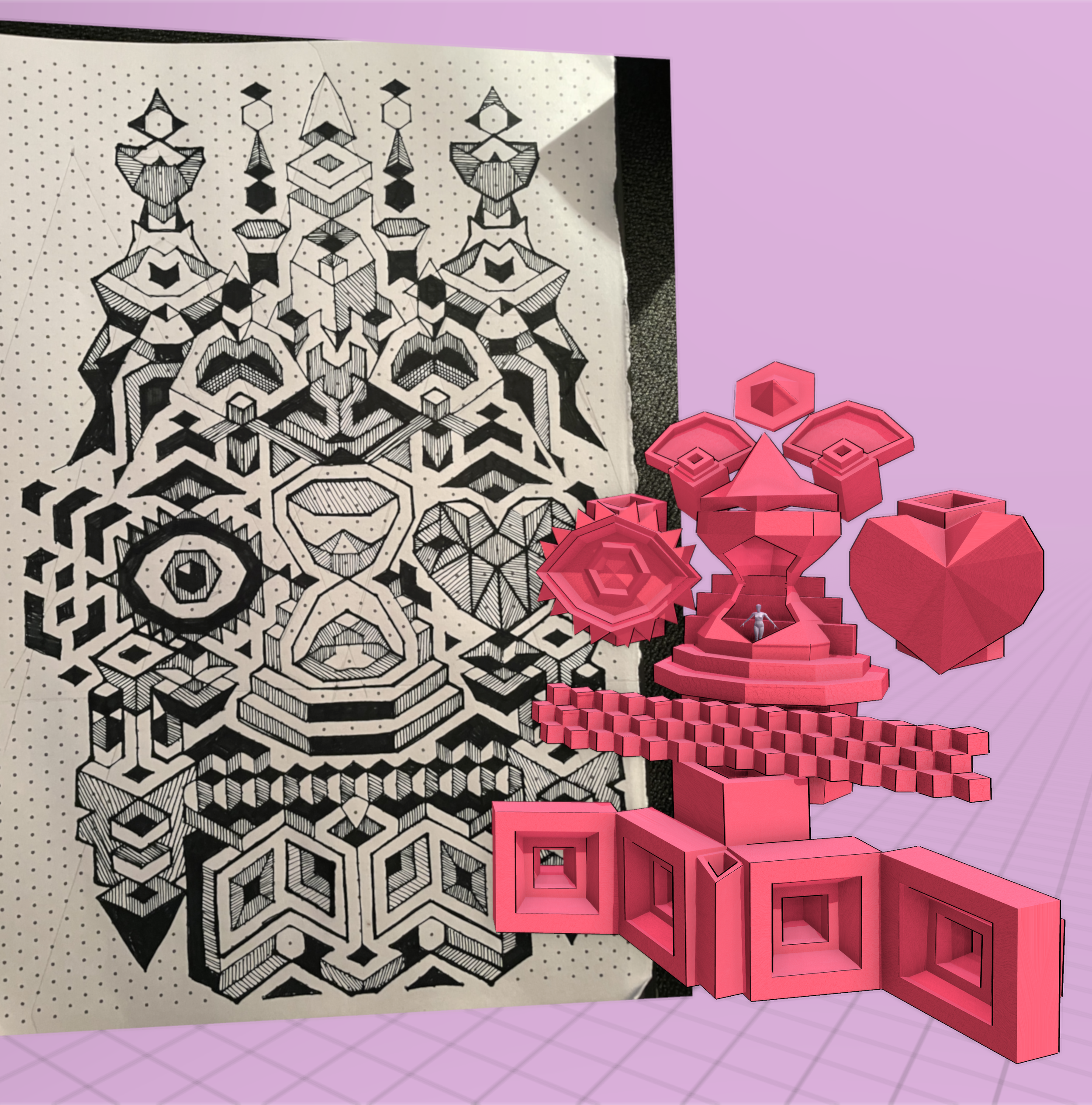
The work moved between virtual and physical processes. Forms created in Gravity Sketch were 3D printed, then developed further using lighting and projection. What began as an experiment in virtual space eventually became a collection of physical objects.
Interestingly, although VR allows artists to work at almost any scale, the resulting sculptures were deliberately small. This introduced an unexpected challenge: how could objects created within an expansive virtual environment be presented meaningfully in a gallery?
Narrow, elevated plinths, internal lighting and projection became part of the solution, demonstrating how the way work is exhibited can be just as important as the process of making it.
For me, this was one of the most interesting discoveries of the residency. VR didn't replace physical making; it introduced another stage into the creative process, allowing ideas to move between digital and physical forms.
Access, Support and Artistic Development
Access to specialist equipment and technical knowledge can be a significant barrier for artists interested in exploring new technologies. Residencies such as Stryx offer an opportunity to overcome some of these barriers, providing resources and support that might otherwise be difficult to access.
The programme brought together artists with different backgrounds and levels of experience. Some had worked with VR before, while others were encountering it for the first time. Naturally, this meant that participants approached the technology from different starting points.
Technical support was available throughout the residency, allowing artists to develop their skills while finding their own creative direction.
However, learning to use a piece of technology is quite different from discovering what you actually want to do with it.
VR can be impressive simply because of what it allows us to experience, but that novelty doesn't automatically make something artistically interesting.
The challenge isn't just discovering what VR can do, but understanding why you might want to use it.
The Conditions for Experimentation
While access to technology is important, the amount of time artists have to explore it matters just as much.
The residency ran over three months, with artists allocated one day per week. For someone learning unfamiliar software, developing ideas and preparing work for exhibition, this was a relatively short period.
Artists also entered the programme with different levels of experience. Those already familiar with VR could begin experimenting more quickly, while others needed time to become comfortable with the equipment and software before exploring its creative possibilities.
The technology itself also presented limitations. VR develops quickly, and differences between headset generations can affect what artists are able to explore, particularly when working with mixed reality and passthrough.
Another consideration was the inclusion of two exhibitions during the residency. Although these provided opportunities to share work with audiences, they also introduced deadlines at a point when ideas were still developing.
There is a tension here. Exhibiting work can be an important part of an artist's development, but the pressure to produce something finished can sometimes interrupt the experimentation that a residency is intended to encourage.
Perhaps a longer development period, or a single exhibition at the end, would allow artists more freedom to explore without feeling that every experiment needs to lead towards a finished piece.
These are useful considerations for any programme supporting artists working with unfamiliar technologies. Providing the equipment is one part of the opportunity, but allowing enough time to experiment, make mistakes and follow unexpected directions is equally important.
Beyond the Residency
The value of an experimental residency can't always be measured by the work produced during it.
New skills, unfamiliar processes and changes in artistic thinking can continue to influence an artist long after the programme has ended. Something that initially feels like an unsuccessful experiment might eventually become the starting point for an entirely different project.
The Stryx VR Residency demonstrates the value of giving artists opportunities to explore emerging technologies without prescribing how they should be used or what the outcome should look like.
Ultimately, the potential of virtual reality within contemporary art may lie less in its ability to simulate alternative worlds and more in its capacity to change how artists think about the one they already inhabit.
By encouraging experimentation across physical and digital boundaries, programmes such as Stryx create opportunities not simply to learn new technologies, but to question established ways of seeing, making and experiencing art.